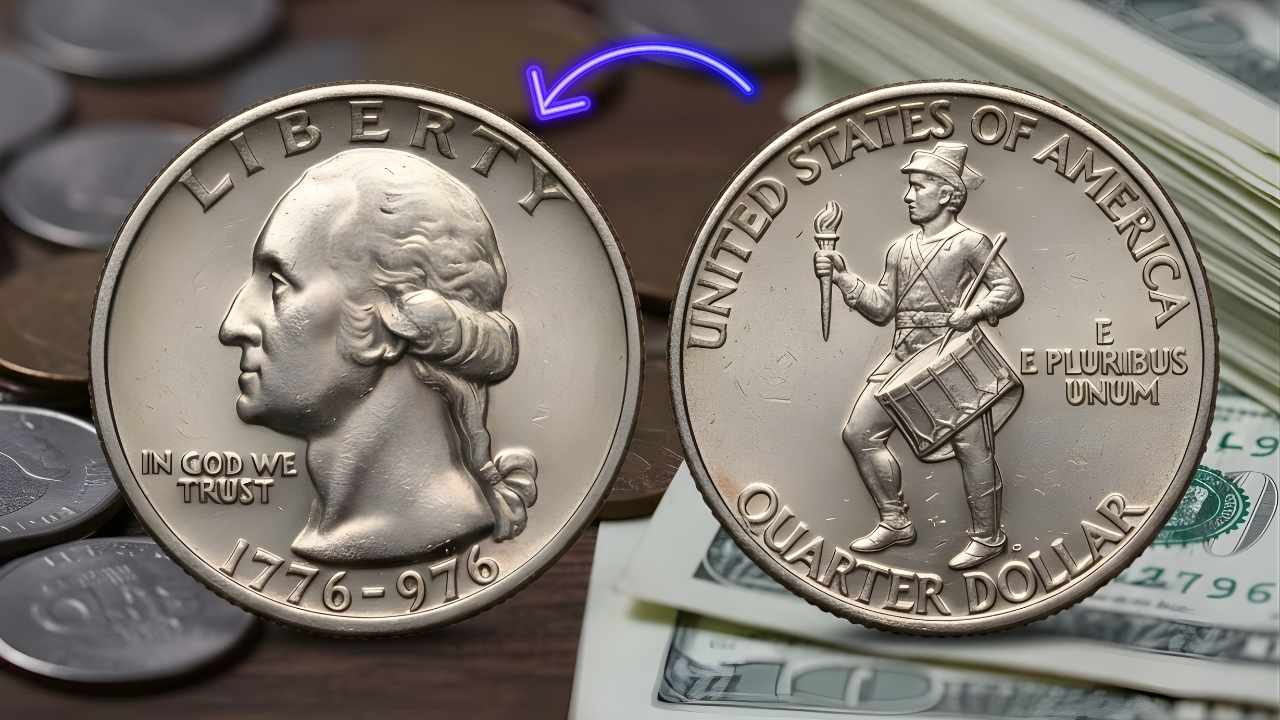
The 1976 drummer boy quarter remains one of the most recognizable coins ever produced in the United States. Created to celebrate the nation’s bicentennial, it stands apart from ordinary quarters thanks to its unique reverse design featuring a colonial drummer and victory torch. This special design replaced the traditional eagle image for one year only, making it instantly memorable. Minted by the United States Mint, the coin was struck in huge numbers, which means most examples are still common today. Yet despite its large mintage, collectors continue searching for rare varieties and high-grade specimens that can be worth far more than twenty-five cents.
Understanding the Design and Historical Meaning
The front of the coin still shows George Washington, but the date is unusual because it reads 1776–1976 instead of a single year. This dual date commemorates 200 years since American independence. On the reverse, the drummer symbolizes the spirit of the Revolutionary War era. The combination of patriotic imagery and one-year design change gives the coin historical importance, even for people who are not serious collectors. Many Americans saved these quarters as souvenirs when they were first released, which is one reason so many remain in circulation today.
Current Value of a Standard Circulated Coin
Most 1976 drummer boy quarters found in pocket change are worth only face value. Because hundreds of millions were produced, circulated examples are extremely common. A typical worn coin generally sells for between twenty-five cents and one dollar depending on condition. While that may sound disappointing, collectors emphasize that value depends heavily on preservation. Coins with sharp details, clean surfaces, and minimal scratches can command slightly higher prices, especially if they have attractive natural toning.
Higher Value in Uncirculated Condition
Uncirculated versions are where things become more interesting. Coins that were never used in daily transactions often retain their original mint luster and crisp details. Such examples can sell for five to fifteen dollars, sometimes more if graded highly by a professional service. Collectors pay premiums for coins graded MS65 or above because flawless surfaces are difficult to find. These pristine pieces are usually discovered in old coin rolls, mint sets, or collections that were stored carefully for decades.
Silver Versions and Their Premium
Not all 1976 quarters were made from the standard copper-nickel composition. Special collector editions were struck in 40 percent silver and sold in proof and uncirculated sets. These silver coins are heavier and have a slightly different color tone. Because of both their metal content and collector demand, they often sell for ten to thirty dollars or more depending on condition and silver prices. Proof versions, which feature mirror-like backgrounds and frosted designs, can be even more valuable when preserved without scratches or haze.
Rare Errors That Increase Value
Error coins are always exciting to collectors, and the 1976 drummer boy quarter has a few notable varieties. Off-center strikes, doubled lettering, and clipped planchets are among the mistakes that can boost value significantly. Even minor errors may sell for twenty to fifty dollars, while dramatic minting flaws can reach hundreds. The key is authenticity, since altered coins sometimes appear on the market. Serious collectors often rely on professional grading services to verify that an error occurred during minting rather than after the coin left the mint.

Tips for Checking If Yours Is Valuable
Anyone can examine their 1976 quarter for potential value. Start by checking the edge to see whether it shows a copper stripe, which indicates a standard clad coin, or a solid silver color, which may signal a silver version. Next, inspect details like lettering, drummer lines, and rim shape for unusual features. Using a magnifier and good lighting helps reveal subtle differences. Storing coins in protective holders prevents scratches and preserves condition, which is crucial for maintaining collector value.
Final Verdict
The 1976 drummer boy quarter is a perfect example of how a common coin can still hold collector appeal. While most are worth only their face value, uncirculated pieces, silver editions, and rare error varieties can be surprisingly valuable. Its historic design and patriotic symbolism ensure it remains popular with collectors, and careful inspection of any example could reveal a hidden treasure hiding in plain sight.