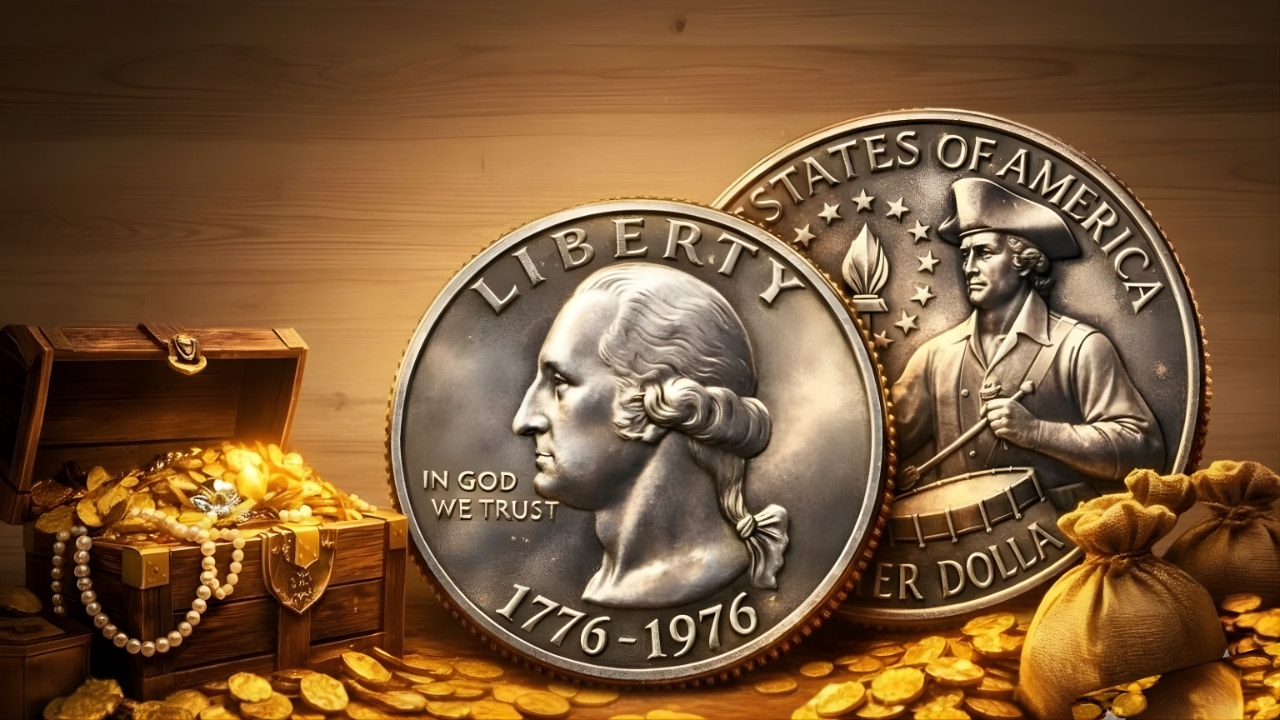
The 1776–1976 Bicentennial Quarter remains one of the most recognizable coins ever produced by the United States Mint. Created to celebrate America’s 200th anniversary of independence, this special quarter features the dual date 1776–1976 on the obverse instead of a single year. While millions were struck, certain versions of this historic coin continue to attract serious attention from collectors in 2026.
Unlike standard quarters, the reverse design showcases a colonial drummer boy alongside a torch encircled by 13 stars, symbolizing the original colonies. The portrait of George Washington remains on the front, preserving the traditional look that Americans recognize. This blend of familiar design and patriotic tribute makes the coin both nostalgic and historically meaningful.
What Makes Some Bicentennial Quarters Valuable?
Most Bicentennial Quarters you’ll find in circulation are still worth just 25 cents. However, value increases significantly when rarity, condition, or minting mistakes come into play. Collectors are constantly searching for coins that stand out from the ordinary.
One major factor is condition. Coins graded in Mint State condition, meaning they show no wear and retain strong luster, often command premiums. A bright, sharply detailed example that looks freshly struck will always attract more buyers than one that has spent decades in circulation.
Rarity also plays a key role. Even common coins can become desirable if preserved in exceptional condition, especially those stored carefully since the 1970s.
Rare Errors That Can Be Worth Hundreds or More
Error coins are where the real excitement begins. These mistakes occur during the minting process and can dramatically increase a coin’s value. Some of the most sought-after Bicentennial Quarter errors include doubled dies, off-center strikes, and wrong planchet errors.
A doubled die error causes letters or numbers to appear slightly duplicated due to a misalignment during the die creation process. This doubling is often visible in the date or inscriptions and can raise a coin’s value substantially.
Off-center strikes happen when the coin blank is not properly aligned during stamping, leaving part of the design missing. The more dramatic the misalignment—while still showing the date—the more collectors tend to pay.
Wrong planchet errors are especially intriguing. In rare cases, a quarter may be struck on a blank intended for another denomination, such as a dime. These unusual pieces can sell for hundreds or even thousands of dollars depending on condition and demand.
The 40% Silver Collector Edition
In addition to standard copper-nickel clad coins, the United States Mint also produced a special 40% silver version for collectors. These were not released into general circulation but were sold in special mint and proof sets.
Silver Bicentennial Quarters are distinguishable by their solid silver-colored edge. Regular clad coins show a copper stripe along the edge, while silver versions do not. They also weigh slightly more than standard quarters.
Although not exceedingly rare, silver editions carry intrinsic metal value and are typically worth more than face value even in circulated condition. High-grade silver proofs in pristine condition are especially popular among collectors.
How to Check If Your Quarter Is Special
If you come across a 1776–1976 quarter, start by examining the edge. A visible copper stripe usually means it’s a standard clad coin. Next, inspect the surface carefully under good lighting. A magnifying glass can help reveal doubling in the lettering or unusual strike patterns.
Pay attention to overall condition. Strong details in Washington’s hair and the drummer boy’s features often indicate minimal wear. Coins with deep scratches, discoloration, or heavy smoothing are generally less valuable.
If you suspect you’ve found something unusual, consider having the coin evaluated by a professional grading service. Authentication not only confirms legitimacy but can also significantly boost resale value.

The 2026 Market Outlook for Bicentennial Quarters
Interest in Bicentennial Quarters remains steady in 2026. Their patriotic design, historical importance, and the thrill of discovering rare variations keep collectors engaged. While common examples are plentiful, high-grade coins and dramatic mint errors continue to perform well in auctions and private sales.
For many hobbyists, searching through pocket change or old coin jars adds an element of adventure to everyday life. Even if most finds turn out to be ordinary, the possibility of uncovering a valuable error keeps the hunt alive.
Final Thoughts
The 1776–1976 Bicentennial Quarter is more than spare change—it’s a small piece of American history. While the majority are only worth their face value, rare errors, silver editions, and well-preserved examples can command impressive prices. Taking a closer look at your quarters might just reveal a hidden collectible waiting to be discovered.
