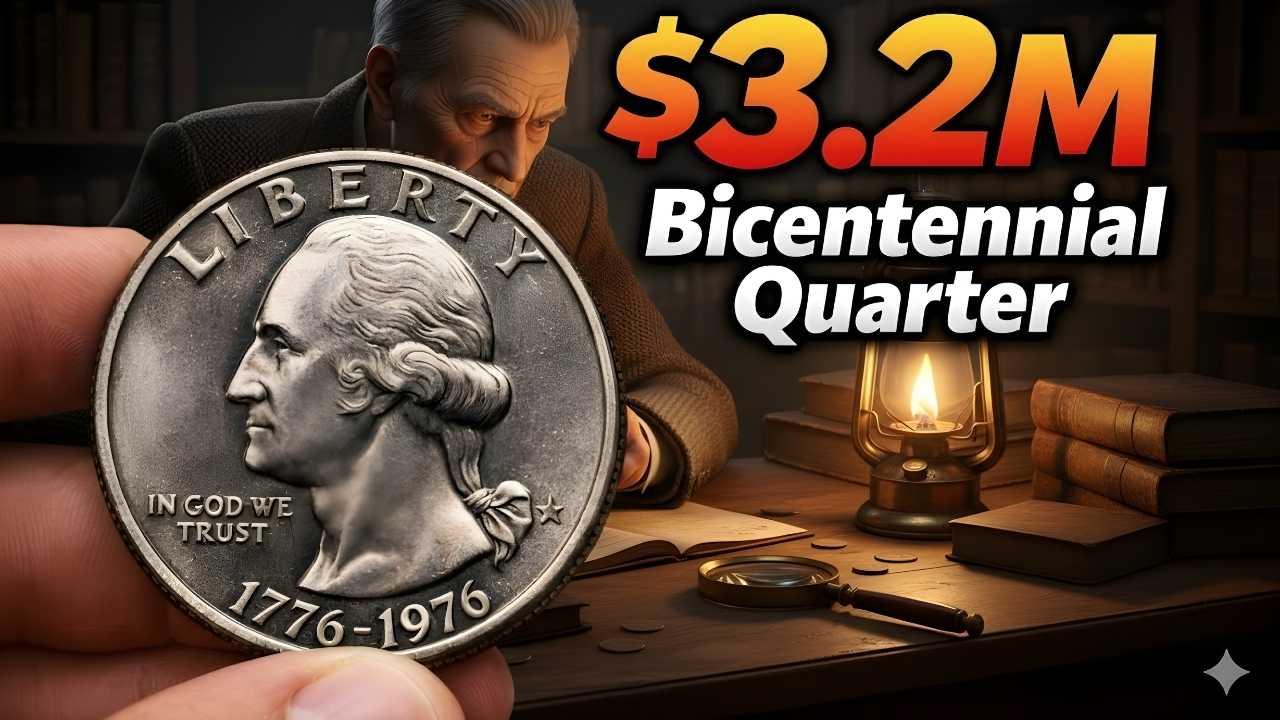
The Bicentennial Quarter is one of the most recognizable American coins ever made, created to celebrate the nation’s 200th anniversary. Struck in 1975 and 1976 by the United States Mint, it features a unique reverse design showing a colonial drummer and a torch encircled by stars. Unlike ordinary quarters, it displays the dual date 1776–1976, instantly distinguishing it from standard issues. Millions were produced for circulation, yet the coin’s historical symbolism and distinctive appearance have made it a lasting favorite among collectors.
The Truth Behind the $3.2 Million Quarter Story
Stories of a Bicentennial Quarter worth $3.2 million have circulated widely, fueling excitement among hobbyists. While such extreme values are not typical, they stem from the rare combination of flawless condition, extraordinary rarity, and dramatic minting errors. Coins reaching that level are usually unique specimens verified by experts and sold through elite auctions. The average Bicentennial Quarter found in circulation is worth only face value, but the legend persists because rare examples truly can command astonishing prices when all factors align.
What Makes Certain Bicentennial Quarters Valuable
Several characteristics determine whether one of these quarters is ordinary or highly collectible. The first is composition. Standard coins were made from copper and nickel, while special collector versions were struck in 40 percent silver. The second factor is condition. Coins preserved without scratches or wear are far scarcer than circulated ones. The third factor is rarity caused by minting errors. When a mistake occurs during production and escapes detection, it creates a coin unlike any other, which collectors find irresistible.

Rare Errors That Increase Value
Mint errors are the main reason some Bicentennial Quarters sell for far more than their face value. Double strikes create overlapping designs, off-center strikes shift the image away from the middle, and wrong planchet errors occur when a quarter design is stamped onto a blank meant for another coin. Clipped planchets and die cracks are also known. These unusual features make each error coin unique, and rarity often translates directly into collector demand. The more dramatic and visible the mistake, the higher the potential price.
Bicentennial Quarter Error Price Table
Error Type | Description | Estimated Value Range
Double Strike | Design struck twice | $500 – $5,000
Off-Center Strike | Image not aligned | $200 – $2,000
Wrong Planchet | Struck on incorrect blank | $1,000 – $10,000+
Clipped Planchet | Missing metal section | $100 – $1,500
Die Crack | Raised line from broken die | $50 – $500
Proof Error | Mistake on proof coin | $2,000 – $20,000+
Silver Bicentennial Quarters and Their Premium
Silver Bicentennial Quarters were never intended for everyday spending. They were issued mainly in collector sets and contain precious metal that gives them intrinsic worth. Even common examples typically sell for more than standard quarters because of their silver content. High-grade specimens or those with unusual toning can bring significantly higher prices. For collectors, these coins offer a combination of historical meaning and bullion value, making them attractive additions to a collection.

How to Identify a Valuable Example
Spotting a potentially valuable Bicentennial Quarter requires patience and close inspection. Start by checking the edge. A solid silver-colored edge may indicate a silver version, while a copper stripe suggests a standard clad coin. Examine the design carefully for doubling, misalignment, or unusual marks. Weight differences can also signal an error. Using a magnifier and a small digital scale can reveal details invisible to the naked eye. When a coin appears unusual, professional authentication can confirm whether it is truly rare.
Why Collectors Continue Searching
Part of the excitement surrounding Bicentennial Quarters comes from the possibility that a rare specimen might still be hiding in circulation or old collections. Unlike ancient coins locked in museums, these were widely distributed, meaning undiscovered treasures could still exist. Stories of valuable finds keep collectors motivated, turning ordinary coin rolls into potential treasure hunts. Even when no rare example appears, the search itself connects collectors with history and craftsmanship.
Final Verdict
The Bicentennial Quarter stands as a symbol of American heritage and one of the most intriguing modern coins to collect. While most examples remain common and worth only their face value, rare errors, silver issues, and pristine specimens can be worth hundreds, thousands, or in extraordinary cases, far more. The famous multimillion-dollar story represents the extreme end of the spectrum, yet it highlights an exciting truth for collectors: sometimes remarkable value can hide inside the most ordinary pocket change.