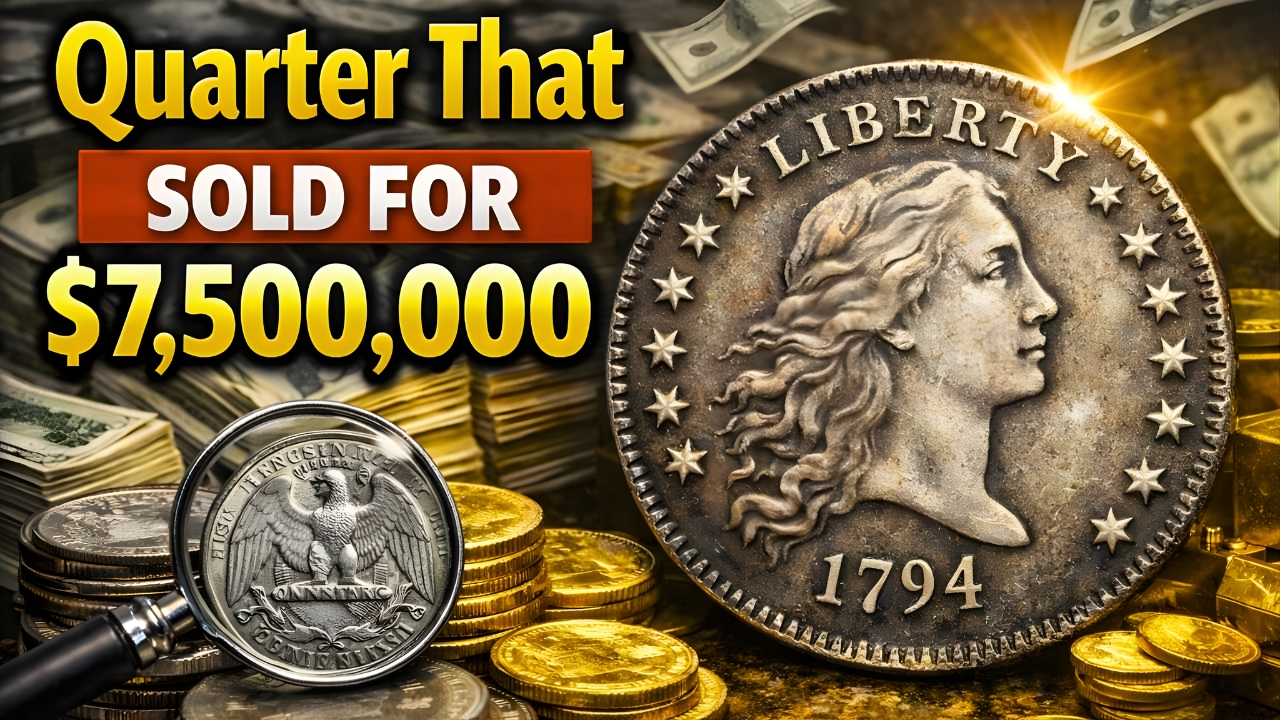
Pocket change rarely gets a second glance, yet one remarkable quarter reportedly sold for an astonishing $7,500,000. The story centers on an unusual minting mistake known as a mule error, a coin struck using two mismatched dies. In this case, a Washington quarter design was paired with the reverse of a Sacagawea dollar, creating a combination never meant to exist. Only a tiny number of these coins are believed to have escaped the Mint, making them legendary among collectors. Whether every detail of the reported sale can be verified or not, the excitement surrounding the coin has fueled renewed interest in checking spare change.
What Makes Any Quarter Valuable
Not every old coin is worth a fortune. Value depends on several measurable factors. Rarity plays the biggest role. A coin with a low mintage or limited surviving examples naturally commands attention. Condition is equally critical. Coins that show minimal wear and retain original luster are far more desirable than heavily circulated pieces. Mint errors also carry strong appeal because they represent something unique. Historical importance and collector demand round out the equation. When all these elements align, prices can soar.
Legendary Quarters That Shaped the Market
Long before the modern mule error made headlines, other quarters had already achieved near-mythical status. The 1796 Draped Bust quarter stands out as the first U.S. quarter ever minted, and surviving examples often sell for seven figures. The 1823/2 overdate quarter is famous for its visible date correction, making it a prized error from the early 19th century. The 1870-S Seated Liberty quarter is another rarity, with extremely few confirmed examples. Even more recent coins like the 1932-D and 1932-S Washington quarters remain key dates because of their low mintages during the first year of the Washington series. These coins remind collectors that extraordinary value is not limited to one era.

Understanding the Mule Error Phenomenon
A mule error occurs when the front and back dies of two different coins are mistakenly paired together. Such errors are rare because minting facilities follow strict procedures. When one slips through, it instantly becomes a standout piece. The Washington quarter and Sacagawea dollar mule is particularly dramatic because it combines two completely different denominations. That visual mismatch is impossible to ignore, which is part of its appeal. Collectors are drawn to coins that tell a clear story of how something went wrong during production.
How to Examine Your Own Quarters
The possibility of discovering a valuable coin keeps people searching. Start by checking the date and mint mark, typically located near the portrait. Compare the design carefully with standard examples. Look for mismatched images, doubled lettering, off-center strikes, or unusual surfaces. Pay attention to condition; coins with sharp details and minimal scratches are more promising. If you believe you have found something unusual, avoid cleaning it. Cleaning can permanently reduce value. Instead, consult a reputable coin dealer or submit the coin to a professional grading service for authentication.
The Role of Auctions and Collector Competition
Record-breaking prices usually occur at major auctions, where wealthy collectors compete for the same rare item. When two determined buyers want the same coin, the final price can climb dramatically. Publicized sales also increase demand, drawing more attention to similar pieces. Even rumors of multimillion-dollar transactions can energize the market, prompting collectors to revisit their collections in hopes of spotting overlooked treasures.

Staying Alert to Scams and Exaggerated Claims
With headlines about million-dollar quarters, misinformation spreads quickly. Counterfeit coins sometimes appear online, designed to imitate rare errors. Some sellers inflate values without proper documentation. Before spending significant money, insist on certification from established grading organizations and research recent auction results. A genuine rarity will have a traceable history and professional authentication.
Why the Story Captures the Public Imagination
The idea that a simple quarter could change someone’s financial future is undeniably thrilling. It transforms everyday currency into a potential treasure hunt. While the chances of finding a seven-figure coin in circulation are extremely slim, history shows that remarkable discoveries have occurred. That slim possibility is enough to keep collectors and casual hobbyists alike searching through jars of spare change.
Final Thoughts
The tale of the $7,500,000 quarter highlights the fascinating intersection of history, rarity, and human curiosity. Most quarters are worth exactly twenty-five cents, yet a rare combination of error and demand can create staggering value. By understanding what makes certain coins special and approaching the market with caution, collectors can enjoy the hunt without falling for hype. The next time you receive change, take a moment to look closely. You may not find a multimillion-dollar rarity, but you will gain a deeper appreciation for the stories hidden in everyday coins.