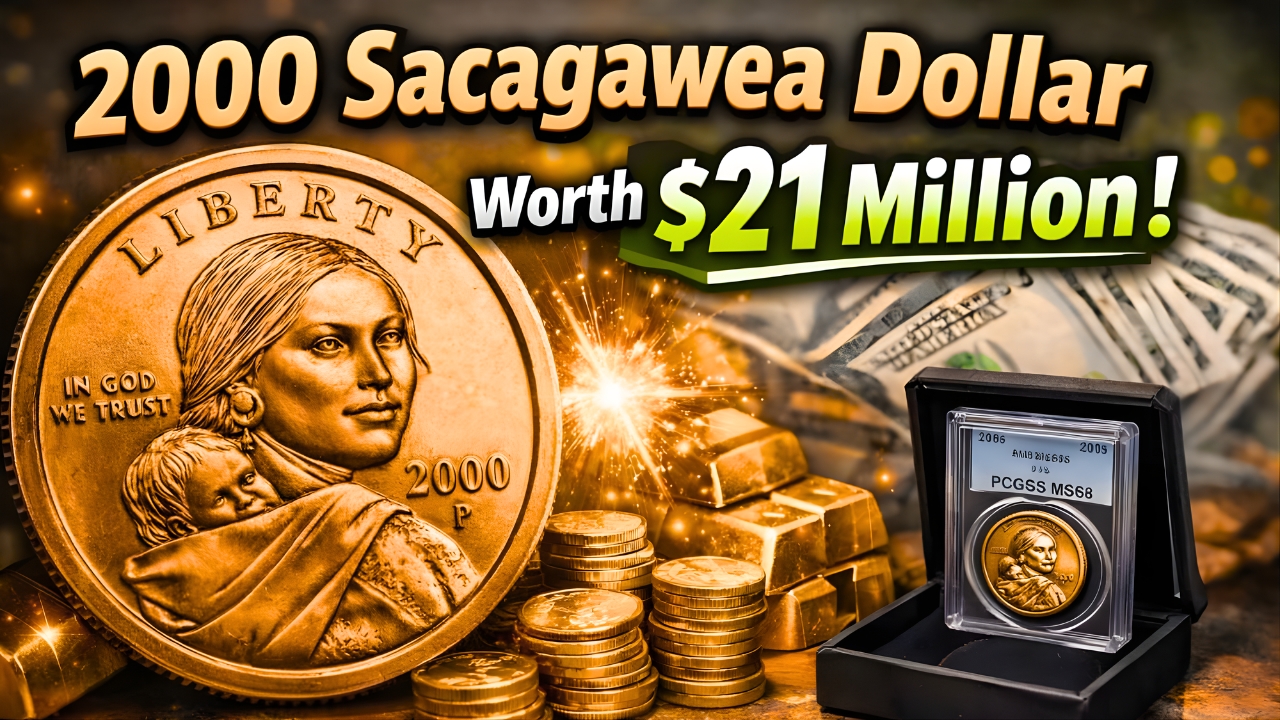
Since its debut in 2000, the Sacagawea dollar has sparked curiosity among collectors and casual coin hunters alike. Its golden hue and tribute to the Shoshone guide who assisted the Lewis and Clark expedition gave it immediate recognition. Over time, however, a bold claim began circulating online: that a rare 2000 Sacagawea dollar is worth an astonishing $21 million. The reality is far less dramatic. No Sacagawea dollar has ever sold for anything close to that figure. While some rare examples command impressive prices, the multi-million-dollar headline is nothing more than an internet myth fueled by wishful thinking and viral content.
Why the Sacagawea Dollar Attracted So Much Attention
When the United States Mint introduced the coin in 2000, it aimed to replace the Susan B. Anthony dollar and encourage wider use of dollar coins in everyday commerce. The design featured Sacagawea carrying her infant son, Jean Baptiste, on the obverse, symbolizing resilience and exploration. Its distinctive golden color led many to mistakenly assume it contained gold. In truth, the coin is composed of a copper core clad in manganese brass, giving it that warm tone without precious metal value. The fresh design and new appearance made it stand out, but mass production meant most examples remain common today.
The Rare Varieties That Truly Matter
Although the $21 million story is fiction, a few Sacagawea dollars are legitimately valuable. The most famous is the Cheerios promotional dollar from 2000. As part of a marketing campaign, a limited number of coins were placed inside cereal boxes. These featured enhanced eagle tail feathers on the reverse, distinguishing them from standard circulation strikes. Because only a few thousand were distributed, collectors prize them heavily, and high-grade examples can sell for thousands of dollars.

Another standout is the mule error coin. This extraordinary mistake occurred when the obverse of the Sacagawea dollar was paired with the reverse of a state quarter. Only a small number escaped the Mint, making them among the most coveted modern U.S. error coins. Auction results have reached well into six figures, proving that genuine rarity drives real value.
Experimental finish coins from 2000 also attract attention. These test strikes were created to evaluate surface treatments before full production began. Their unusual texture and limited quantities give them strong collector appeal, especially when preserved in excellent condition.
Common Misunderstandings About Value
One of the biggest misconceptions is that all Sacagawea dollars are rare simply because they are not often seen in circulation. In reality, millions were minted. Most are worth only their face value unless they possess a specific error, special finish, or exceptional grade. Another widespread belief is that the golden color signals gold content. This assumption has led many people to overestimate their coin’s worth. Without a rare variety or pristine condition, a standard 2000 Sacagawea dollar typically holds no premium.
The Importance of Condition and Grading
Condition plays a critical role in determining how much a coin is worth. Even a scarce variety can lose significant value if it shows heavy wear or damage. Professional grading services evaluate coins on factors such as luster, strike sharpness, and preservation. A high-grade example sealed in a certified holder often commands far higher prices than a similar coin left ungraded. For collectors who believe they may have a rare variety, authentication is an essential step.
The Evolution into the Native American Dollar Series
In 2009, the series transitioned into the Native American dollar program. While the obverse portrait of Sacagawea remained, the reverse design began changing annually to honor Native American contributions to U.S. history. These coins continue to be produced, mainly for collectors rather than general circulation. Though most modern issues are modestly priced, certain limited-edition releases and high-grade proofs maintain steady demand.
Why the Myth Persists
Stories of hidden treasure capture the imagination. The idea that a coin in your pocket could be worth millions is irresistible, and sensational headlines travel quickly. While the $21 million claim is unfounded, it reflects the excitement that coin collecting can generate. Genuine discoveries, such as mule errors or rare promotional pieces, remind collectors that remarkable finds do happen — just not at the scale suggested by viral rumors.

How to Check Your Sacagawea Dollars
If you want to evaluate your coin, start by examining the reverse design carefully, looking for unusual details in the eagle’s tail feathers or mismatched designs. Check the year and mint mark, and compare your coin with reliable reference images. Avoid cleaning it, as this can reduce its value. When in doubt, consult a reputable dealer or submit the coin for professional grading.
Final Verdict
The 2000 Sacagawea dollar worth $21 million is a myth, but the series still offers exciting opportunities for collectors. Rare varieties like the Cheerios dollar and the mule error prove that some coins can reach impressive prices. By focusing on verified information rather than viral claims, collectors can better understand the true value of these golden-colored dollars and enjoy the hunt for authentic treasures.
