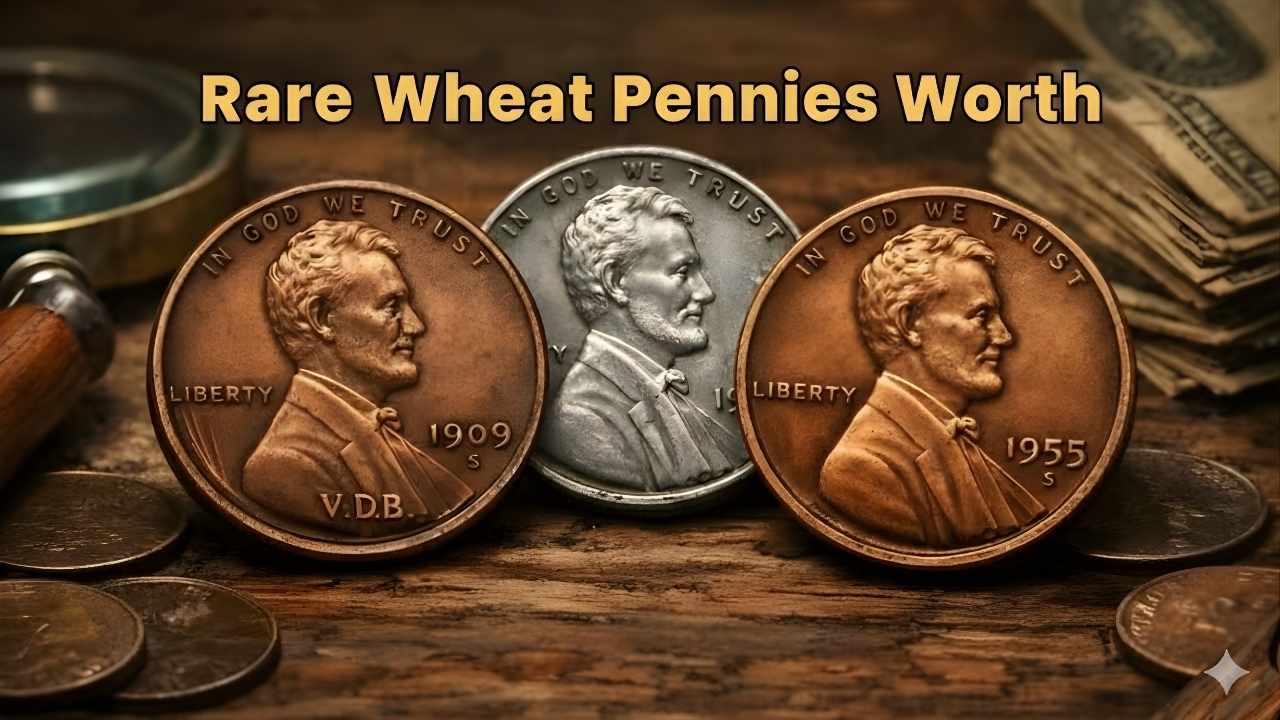
Wheat pennies continue to attract collectors because they represent one of the longest-running and most historically rich coin series in U.S. history. First issued in 1909 to honor Abraham Lincoln, these coins feature two wheat stalks on the reverse, which is how they earned their nickname. Produced by the United States Mint until 1958, they were widely circulated during decades that included world wars, economic upheaval, and major cultural shifts. Their connection to important moments in history gives them an appeal that goes far beyond their one-cent face value.
What Determines Wheat Penny Value
Not all wheat pennies are rare or valuable, so understanding what affects price is essential. Several factors determine worth, including mintage numbers, condition, mint mark, and whether a coin has any errors. Coins produced in smaller quantities are usually more desirable because fewer survive today. Condition is equally important, since collectors pay much higher prices for coins with sharp details and minimal wear. A well-preserved coin can be worth dozens or even hundreds of times more than the same coin in worn condition.
Rare Dates That Command High Prices
Certain wheat pennies consistently rank among the most valuable because of scarcity. Early issues from the first years of production are especially sought after. Low mintage coins from branch mints often top collector wish lists, as do pieces produced during unusual historical circumstances. Some dates are famous for their rarity and can sell for hundreds or thousands of dollars if found in excellent condition. These standout coins are the ones most often highlighted in price guides and auction results.

The Impact of Mint Marks on Rarity
Mint marks are small letters on coins that indicate where they were struck, and they play a major role in determining value. Wheat pennies were produced at multiple facilities, and some locations struck far fewer coins than others. As a result, two pennies from the same year can have very different values simply because they were minted in different places. Collectors carefully check mint marks because a tiny letter can mean the difference between a common coin and a highly desirable rarity.
Valuable Error Wheat Pennies
Errors are among the most exciting discoveries in coin collecting, and wheat pennies have several famous examples. Mistakes such as doubled lettering, off-center strikes, or missing design elements can significantly increase a coin’s value. These errors occurred during production and slipped into circulation unnoticed, which makes them scarce today. Collectors often pay strong premiums for dramatic mistakes, especially when the flaw is easy to see without magnification. Because altered coins exist, authentication is important when evaluating an unusual piece.
Condition and Grading Matter Most
Condition is often the deciding factor in how much a wheat penny is worth. Coins that circulated for decades usually show scratches, discoloration, and worn edges, which lowers their value. By contrast, coins stored carefully in albums or rolls may retain their original luster and sharp detail. Professional grading services use standardized scales to evaluate condition, and these grades help establish reliable market prices. A top-grade coin can be worth many times more than a similar coin in average condition.

Tips for Identifying Valuable Wheat Pennies
Anyone can begin searching for valuable wheat pennies with a careful inspection routine. Start by checking the date and mint mark, then examine the coin under bright light. A magnifying glass helps reveal small details that might signal rarity or an error. Comparing coins with trusted value charts or recent sales listings can provide realistic estimates. Keeping coins in protective holders prevents damage and helps maintain their potential value over time.
Final Verdict
Rare wheat pennies remain one of the most exciting areas of coin collecting because they combine history, scarcity, and the thrill of discovery. While many are worth only a few cents, certain dates, mint marks, pristine examples, and error coins can be surprisingly valuable. With patience and attention to detail, collectors may find that an ordinary-looking penny holds hidden worth far beyond its humble denomination.