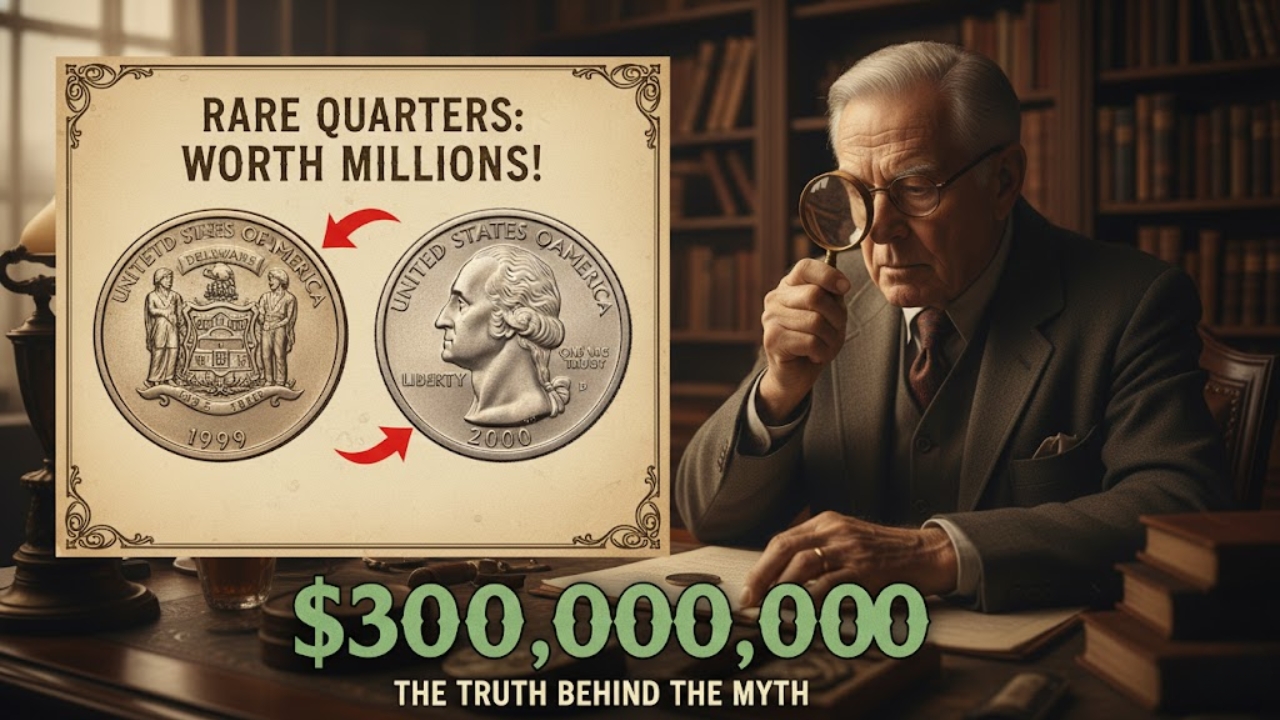
When the United States Mint launched the 50 State Quarters Program in 1999, few expected it to spark a nationwide treasure hunt. Before that, quarters carried the same familiar design for decades. Then came a bold idea: release five new quarter designs each year, honoring states in the order they joined the Union.
Starting with Delaware in 1999 and ending with Hawaii in 2008, the program transformed everyday pocket change into miniature works of art. Families collected them in folders, kids searched through coin jars, and banks handed out fresh rolls to eager hobbyists. More than 34 billion quarters were struck during the program’s run. With numbers that large, it was inevitable that mistakes would slip through.
Those mistakes are now among the most talked-about modern coin rarities in America.
The Error Coins That Captured National Attention
Most state quarters are worth exactly 25 cents. However, certain varieties have sold for hundreds, thousands, and in rare cases, far more at major auctions.
One of the most famous examples is the 2004 Wisconsin quarter featuring an extra leaf on the ear of corn. Known as the “Extra Leaf” variety, it exists in two versions: High Leaf and Low Leaf. Well-preserved examples have sold for thousands, and high-grade certified coins command even stronger prices.
The 1999 Delaware “Spitting Horse” quarter is another favorite among collectors. A die crack near the horse’s mouth gives the appearance that the horse is spitting. Though more common than some other errors, strong-condition examples still bring solid premiums.
In 2005, Kansas quarters with a grease-filled die created the now-famous “In God We Rust” variety. The missing “T” in “Trust” turned a small minting flaw into one of the most recognized modern coin errors.
Other notable varieties include off-center strikes from Georgia and South Carolina, doubled dies from Connecticut and Nevada, and wrong-planchet strikes such as Maryland quarters struck on nickel or dime blanks. The rarer the error and the better the condition, the stronger the value.
Silver Proof Quarters: Beauty Meets Collectibility
Not all valuable state quarters come from circulation. The United States Mint also produced special silver proof sets for collectors. These coins were struck multiple times using polished dies, creating mirror-like backgrounds and frosted design elements.
The 2008 Hawaii silver proof quarter, featuring King Kamehameha I, marked the final issue in the state series. In high grades, especially deep cameo examples, these coins have shown steady demand. While most silver proofs are not rare, pristine examples certified by top grading services can bring impressive returns.
Collectors often value these coins not just for silver content but for their artistic presentation and historical significance as part of the complete 50-state run.
Where Valuable Quarters Are Still Being Found
What makes state quarter collecting so appealing is accessibility. Unlike older rare coins that require serious investment, state quarters can still be found in circulation, coin rolls, estate collections, and forgotten jars.
Collectors recommend starting with simple tools: a magnifying glass and good lighting. Look for doubling in letters, unusual spacing, missing design elements, or portions of the coin that appear off-center. Even small differences can signal a recognized variety.
Unopened bank rolls have also produced surprises over the years. Although the odds are slim, major error finds have come from original rolls that sat untouched for decades.
Condition Is Everything in 2026
By 2026, many state quarters have seen heavy circulation. Scratches, wear, and environmental damage significantly reduce collector value. Coins graded in Mint State condition, especially MS-67 or higher, command much stronger prices.
Professional grading services such as PCGS and NGC authenticate and assign condition grades, often increasing buyer confidence and market value. A coin that might sell for a few hundred dollars raw could bring significantly more once certified in top condition.
Cleaning, however, is a costly mistake. Even light polishing can permanently damage surfaces and destroy potential value.
Why Some State Quarters Reach Exceptional Prices
It’s rare for a state quarter to sell for extraordinary sums, but when it happens, several factors are usually involved: extreme rarity, flawless preservation, strong auction competition, and verified authenticity. Coins with dramatic errors, unusual mint origins, or elite grades often attract serious collectors willing to pay premiums.
Market timing also plays a role. As younger collectors who grew up during the program enter their peak earning years, demand for top-tier examples continues to rise.
Final Thoughts
The State Quarters Program remains one of the most successful initiatives in American coin history. While most examples are common, certain errors and high-grade pieces have become genuine collector prizes. With patience, knowledge, and careful examination, valuable finds are still possible. Before spending your next quarter, it may be worth taking a closer look.
