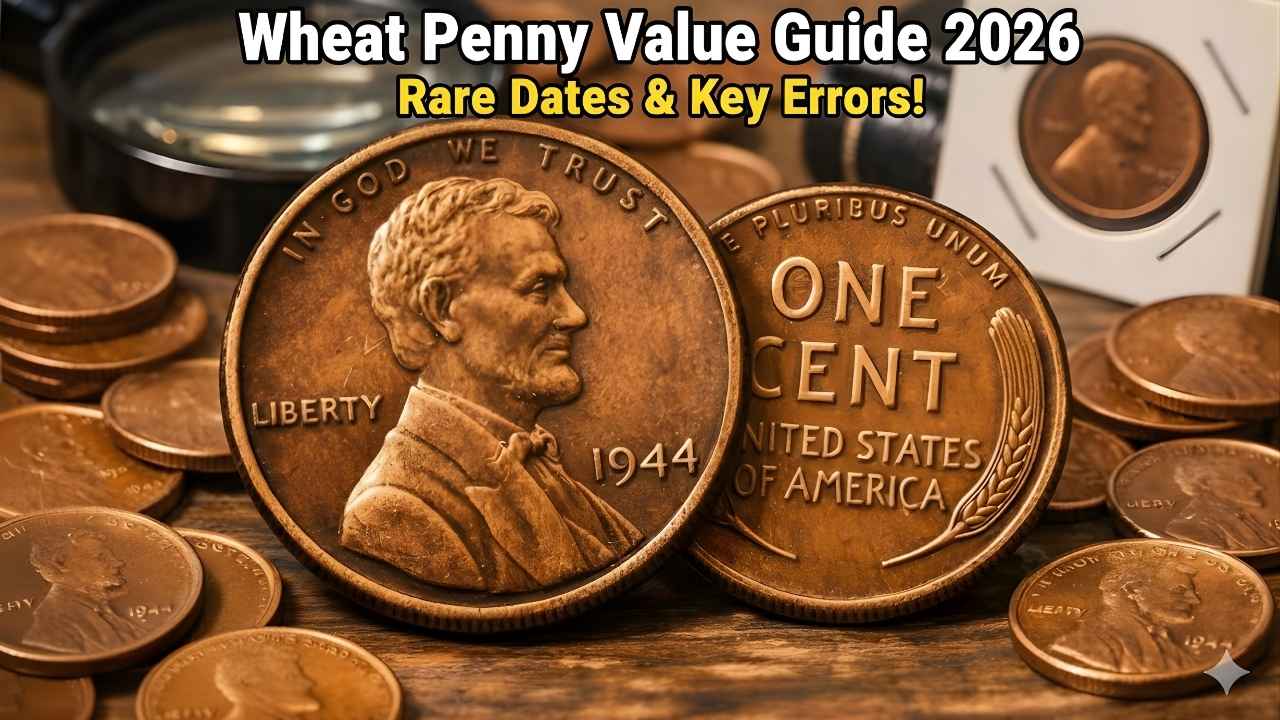
Wheat pennies remain one of the most loved coins in American collecting because they blend history, nostalgia, and the possibility of hidden value. First issued in 1909 to honor Abraham Lincoln, these coins marked a major shift in U.S. coin design by featuring a real historical figure. Minted by the United States Mint until 1958, they circulated through some of the most important decades of the twentieth century. Their long production run means millions still exist, yet certain dates and varieties can be worth far more than one cent.
Wheat Penny Value Range in 2026
Most wheat pennies found today fall into the common category and are typically worth three to fifteen cents depending on condition. Coins with heavy wear tend to stay at the lower end, while cleaner examples with visible details may sell for slightly more. However, this basic range only applies to ordinary dates. As soon as a coin has a lower mintage, unusual mint mark, or distinctive error, its value can increase dramatically. Some rare pieces are valued in the hundreds or even thousands of dollars.
Key Factors That Determine Value
Several elements influence how much a wheat penny is worth. The first is rarity, which usually depends on how many coins were originally produced and how many survived. The second factor is condition. Coins with sharp lettering, strong detail in Lincoln’s portrait, and minimal scratches are much more desirable than worn examples. Another major factor is mint mark. A tiny letter below the date can indicate a specific mint location, and certain locations produced far fewer coins than others. Collectors study these small details carefully when estimating value.
Important Dates Collectors Search For
Some wheat pennies consistently rank among the most valuable because of their scarcity or unique history. Early years from the first decade of production are especially sought after, as fewer remain in collectible condition. Coins struck during unusual historical periods, such as wartime years, also attract attention. When collectors examine rolls of old pennies, they often search for these key dates first, since they represent the highest potential rewards. Even a single rare find can be worth more than an entire jar of common coins.
Error Coins That Can Increase Worth
Minting errors are among the most exciting discoveries in wheat penny collecting. These mistakes occurred during production and were released into circulation unnoticed. Examples include doubled lettering, off-center strikes, clipped edges, and missing design elements. Because such errors are relatively rare, collectors are willing to pay strong premiums for them. The more dramatic and visible the error, the higher the potential value. Authentication is important, since experts must confirm that a flaw happened during minting rather than after the coin entered circulation.
Condition and Grading Explained
Condition plays a crucial role in determining a coin’s market price. Collectors use grading terms to describe preservation, ranging from heavily worn pieces to nearly perfect specimens. A wheat penny that has spent decades in circulation may show faded details and surface damage, reducing its value. By contrast, coins stored carefully in albums or rolls can retain their original shine and sharp features. Professional grading services evaluate coins using standardized scales, and their certified grades often make it easier to sell valuable pieces.

Tips for Checking Your Wheat Pennies
Anyone can begin evaluating wheat pennies at home with a simple routine. Start by sorting coins by date and mint mark, then examine them under bright light. A magnifying glass helps reveal small details and possible errors. Comparing coins with updated value charts or recent sales results provides realistic estimates. Storing coins in protective holders helps prevent scratches and preserves condition, which is essential for maintaining long-term collector interest.
Final Verdict
The wheat penny value guide for 2026 shows that these small copper coins still hold big appeal for collectors. While many remain common and inexpensive, certain dates, mint marks, pristine examples, and error varieties can be surprisingly valuable. With patience, knowledge, and a careful eye, anyone can explore the world of wheat pennies and possibly uncover a hidden treasure tucked away in an ordinary coin collection.